
Yes, It’s That Time of Year Again!


Fall has arrived, and with it come the often-hectic months of October, November, and December, when life can feel even busier than usual.
Everywhere we turn, articles about staying healthy throughout the winter and holiday season appear alongside a seemingly endless stream of invitations to parties, Thanksgiving feasts, and other festivities that can make maintaining balance a challenge.
Rather than simply reminding you to take vitamin C and vitamin D, I’d like to share a few additional strategies to help you navigate the coming months with more energy, resilience, and calm.
Keep Caffeine in Check
Coffee has received plenty of attention in recent years as research continues to explore its potential health benefits. For many of us, that morning cup is a cherished ritual and a welcome start to the day. Coffee and tea can certainly fit into a healthy lifestyle, but more is not always better.
Caffeine stimulates the central nervous system and can contribute to anxiety, jitteriness, palpitations, and disrupted sleep-in susceptible individuals. During an already stressful season, excess caffeine may leave you feeling more wired than energized. Effects vary widely from person to person, so pay attention to how much you consume and how it affects you.
If you enjoy a morning cup of coffee or black tea, you may not need to give it up. Instead, consider replacing additional cups throughout the day with green tea or caffeine-free herbal tea. One of my favorite herbal teas is Rooibos Earl Grey. Green tea generally contains less caffeine than coffee and provides L-theanine, an amino acid studied for its potential effects on relaxation and attention. The research is promising, although the benefits should not be overstated.
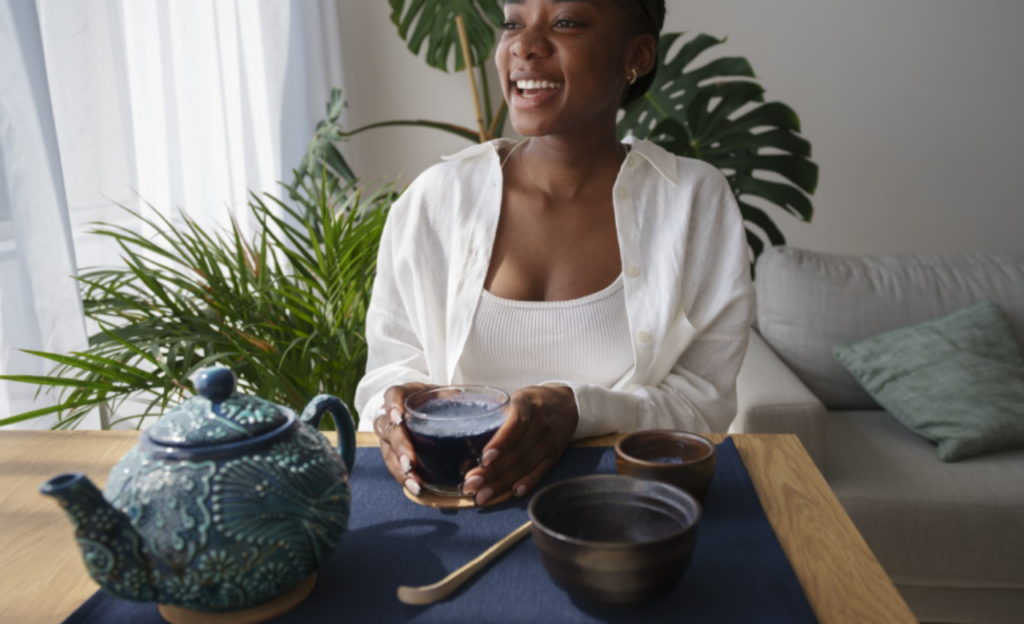
Experiment with different varieties until you find one you enjoy. A little tip: green tea often tastes best when brewed at a lower temperature and steeped for a shorter time than black tea, which helps prevent bitterness.
And remember, if you are struggling with sleep, consider limiting caffeine to the morning or early afternoon—or earlier if you are particularly sensitive.
Establish a Bedtime Ritual
Our days are often packed with work, responsibilities, and an endless to-do list. Many of us continue working or scrolling on our phones until the very moment we climb into bed, only to wonder why our minds refuse to settle.
One of the simplest ways to support better sleep is to create a predictable, calming transition between the day’s activities and bedtime.
Set aside 15–30 minutes each evening for a relaxing ritual. Dim the lights, listen to mellow music, do some gentle stretching, read a book, or enjoy a warm bath. Choose something that helps you shift out of go, go, go mode and into a more restful state.
Consider setting an alarm on your phone or computer 45 minutes before bedtime as a reminder to stop working and begin winding down. Whenever possible, put away electronic devices during the final 30–60 minutes before sleep. Screen use can delay bedtime, expose you to light that affects circadian rhythms, and keep your mind engaged with stimulating or stressful content.

A consistent sleep schedule is equally important. Most adults need at least seven hours of sleep each night, and many feel best with more. Give yourself permission to make sleep a priority rather than treating it as whatever time remains after everything else is done.
Make Morning Light Part of Your Routine
As the days grow shorter, getting out of bed on dark winter mornings can become increasingly difficult. Light plays an important role in regulating our circadian rhythm, the internal clock that helps coordinate sleep, wakefulness, and other daily biological processes.
Whenever possible, get outside for natural daylight early in the day. Even a short morning walk can combine light exposure with movement and a refreshing start to your morning.
If the darker months significantly affect your mood, motivation, or energy, consider whether a therapeutic light box might help. Bright-light therapy is an established treatment for seasonal affective disorder (SAD), a form of depression associated with seasonal changes.
For winter-pattern SAD, commonly recommended light boxes provide 10,000 lux and are used for about 30–45 minutes in the morning, according to clinical guidance. An easier option that lets you go about your morning routine while still getting the full-spectrum light benefits is the Luminette Light Therapy Glasses. I wear these as I brush my teeth, brew my coffee, and exercise in the mornings.
Take Mindful Breathing Breaks
It is remarkable how a few intentional breaths can help us pause and reconnect with the present moment.
Mindfulness apps can remind you to take these breaks throughout the day. Choose one that you enjoy and, if helpful, set gentle reminders to pause at regular intervals.
When the reminder sounds, try this simple exercise:
- Look away from your computer and relax your eyes.
- Take three to five slow, comfortable breaths, allowing your abdomen to expand naturally as you inhale.
- Release tension in your jaw and shoulders.
- Notice how you are feeling without judging yourself.
- Return to your work when you are ready.
Slow, controlled breathing and mindfulness practices may help reduce perceived stress and promote relaxation. Research on mindfulness-based interventions also suggests benefits for some symptoms of anxiety and depression, although results vary, and no single technique works for everyone.
You do not need to meditate for 30 minutes to benefit from taking a pause. Even a moment of intentional breathing can interrupt an automatic stress response and help you approach the next task with greater awareness.
Get Up and Move
When life gets busy, exercise is often one of the first things to disappear from our schedules. Yet movement can be one of the most effective ways to support both physical and mental well-being.
Regular physical activity is associated with better cardiovascular and metabolic health, improved mood, and better sleep. It can also help improve insulin sensitivity and glucose regulation.
Although working toward a consistent exercise routine is valuable, you do not have to fit an entire workout into every busy day. Short bouts of movement throughout the day count, too.
Try taking a brisk walk around the block, climbing a few flights of stairs, doing some bodyweight squats, burpees, push-ups, or stretching between appointments. If you spend much of your day sitting, set a recurring alarm to remind yourself to get up and move periodically.
The World Health Organization recommends that adults aim for 150–300 minutes of moderate-intensity aerobic activity per week, or an equivalent amount of vigorous activity, along with muscle-strengthening activities on at least two days per week. If that feels overwhelming, start with what is realistic for you and build gradually.
Think of movement breaks as an investment in your energy and long-term health, not another item on an already crowded to-do list.
Enjoy the Season’s Vitamin A-Rich Foods
Fall and winter bring a wonderful selection of colorful, nutrient-rich produce. Carrots, sweet potatoes, pumpkin, butternut squash, kabocha squash, delicata squash, kale, spinach, and Swiss chard are all excellent additions to a seasonal menu. Choose as many different red and orange vegetables and fruits as you can to pack in this immune-supporting vitamin family.
Many of these foods provide beta-carotene, a plant pigment that the body can convert into vitamin A. Vitamin A plays an essential role in normal immune function, vision, and the health of our skin and mucous membranes, which help form part of the body’s protective barriers.

Enjoy these foods regularly as part of a varied diet. Roasted winter squash, sweet potato soup, sautéed greens, and pumpkin puree added to soups or oatmeal are easy ways to incorporate more of them into your meals.
Foods high in Vitamin A are safe; however, do not take high-dose Vitamin A supplements without consulting your naturopathic doctor. High doses can cause complications with pregnancy, headaches, and other adverse reactions.
Although vitamin A is essential for immune health, eating more of it does not guarantee that you will avoid winter infections. Aim to meet your nutritional needs through a balanced diet rather than relying on a single nutrient to prevent illness.
Use Aromatherapy as a Relaxation Ritual

A scent can be a lovely way to make your home feel more peaceful and inviting during the darker months.
Lavender is commonly used in relaxation rituals, while peppermint and rosemary are often chosen for their fresh, invigorating aromas. Other calming essential oils include Clary Sage, Chamomile, Frankincense, Bergamot, ylang-ylang, and more. You might enjoy a few drops of an appropriate essential oil in a diffuser or simply take a moment to appreciate the scent of fresh herbs while cooking.
You do not need an elaborate collection of oils to create a calming atmosphere. Choose a relaxing scent you enjoy and make its use part of a broader routine that helps you slow down. My favorite essential oil company? www.originalswissaromatics.com
Practice Gratitude
Amid the demands of the holiday season, it’s easy to focus on everything that remains undone. We may overlook the small moments of pleasure and connection that make our days meaningful.
One simple practice is to take a moment each evening to identify one thing you appreciated that day. It might be a conversation with a friend, a delicious meal, a beautiful sunset, a kind gesture, or simply having a few quiet minutes to yourself.
You can write these observations in a journal, share them with someone you love, or keep them to yourself. There is no right or wrong way to practice gratitude.
Research suggests that gratitude exercises may support psychological well-being, although evidence for direct physical health benefits is more mixed. Think of gratitude as a simple opportunity to shift your attention toward the positive aspects of your life, not as an obligation to feel happy when things are difficult.
You can acknowledge what is challenging while still making room for what is good.
Give Yourself Permission to Find Balance
The holiday season does not need to be a test of how much you can accomplish or how perfectly you can maintain every healthy habit.
Some days you may exercise, prepare nourishing meals, meditate, and get to bed on time. On other days, your schedule may take over. That is part of being human.
Rather than trying to do everything, choose one or two practices that feel manageable and begin there. Perhaps you will establish a bedtime ritual, take a short walk each morning, or pause for a few mindful breaths between appointments.
Small, consistent actions can add up over time. By making room for rest, movement, nourishing food, and moments of connection, you can support your well-being while still enjoying the people and traditions that make this season special.
Wishing you a healthy, peaceful, and joyful fall and holiday season!
References
- Pollan M. Caffeine: How Coffee and Tea Made the Modern World. Audible audiobook. New York, NY: Audible Originals; 2020.
- Walker MP. Why We Sleep: Unlocking the Power of Sleep and Dreams. New York, NY: Scribner; 2017.
- Walker MP. Why We Sleep: Unlocking the Power of Sleep and Dreams. New York, NY: Scribner; 2017.
- National Institute of Mental Health. Seasonal Affective Disorder. Describes light therapy using a 10,000-lux light box, typically for 30–45 minutes in the morning, as a treatment for winter-pattern SAD. NIMH clinical information
- World Health Organization. WHO Guidelines on Physical Activity and Sedentary Behaviour. Geneva: World Health Organization; 2020. Guidelines and evidence.
- National Institutes of Health, Office of Dietary Supplements. Vitamin A and Carotenoids: Fact Sheet for Health Professionals. Covers vitamin A’s role in immune function, food sources, recommended intake, and the risks of excess supplementation. NIH fact sheet.
- Yoo O, Park SA. Anxiety-reducing effects of lavender essential oil inhalation: a systematic review. Healthcare (Basel). 2023;11(22):2978. doi:10.3390/healthcare11222978. Aromatherapy and essential-oil safety.
- Hedigan F, Sheridan H, Sasse A. Benefit of inhalation aromatherapy as a complementary treatment for stress and anxiety in a clinical setting: a systematic review. Complement Ther Clin Pract. 2023;52:101750. doi:10.1016/j.ctcp.2023.1017509
Boggiss AL, Consedine NS, Brenton-Peters JM, Hofman PL, Serlachius AS. A systematic review of gratitude interventions: effects on physical health and health behaviors. Journal of Psychosomatic Research. 2020;135:110165. doi:10.1016/j.jpsychores.2020.110165.