Healthy Meal Ideas: Simple Tips and Tricks for Nourishing Everyday Meals


By the time evening rolls around, most of us are not thinking about nutrients; we are thinking about getting something on the table with whatever energy we have left. In my practice, I often see a gap between knowing how to eat well and actually making those choices consistently. Work demands, family responsibilities, and packed days can easily push healthy habits to the background.
The good news is that nourishing meals do not require elaborate recipes, a perfectly stocked pantry, or hours in the kitchen. They come down to a handful of simple principles, practiced consistently. In this guide, I will walk through what actually makes a meal nourishing, a few building blocks you can use at every meal, and practical tips that make eating well realistic even on your busiest days.
What Makes a Meal Truly Nourishing
When patients say they want to “eat healthy,” they often think first in terms of calories or what to cut out, and then blame themselves when willpower alone does not carry them through. But nourishment is really about what you are adding in. A truly nourishing meal supplies your body with a mix of protein, healthy fats, fiber, and a range of vitamins and minerals, the raw materials it needs for energy, digestion, hormone balance, and mood.
I like to think of each meal as an opportunity rather than a test to pass or fail. Every plate you put together is a chance to send your body useful information, whether that is steady energy for the afternoon or the nutrients it needs to repair and rebuild overnight.
Understood this way, healthy eating stops feeling like restriction and starts feeling like a form of daily self-care.
Simple Building Blocks for Every Meal
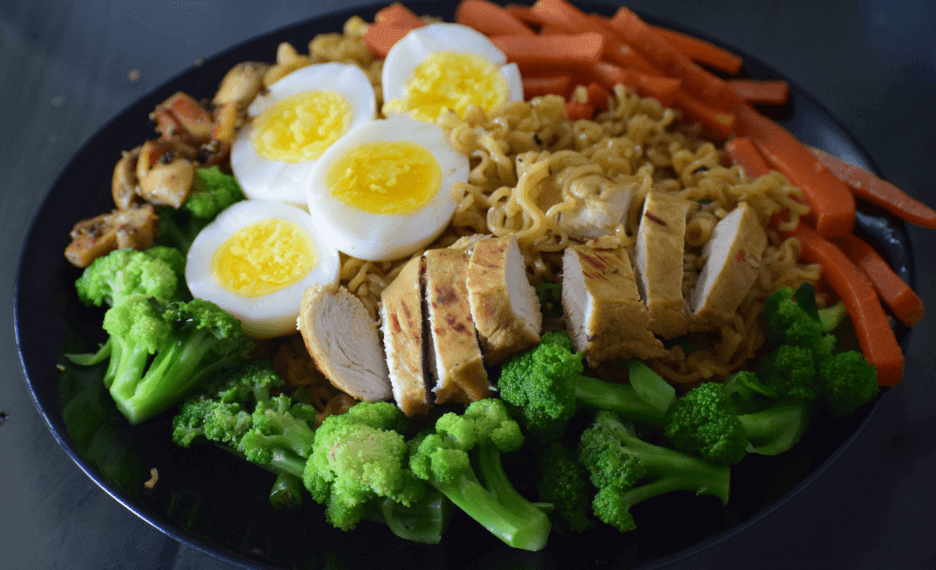
You do not need to count or measure anything to eat a balanced meal. A helpful mental model is to picture your plate divided into a few simple sections:
- Vegetables, at least half your plate: Aim for color and variety, since different colors tend to supply different nutrients. Try to eat 1 vegetable from every color in the rainbow, every day. Raw, roasted, steamed, baked or stir-fried all count.
- Protein, about a quarter to half of your plate: This can be animal-based, such as pasture raised land animals, cold water fish or eggs. When choosing plant-based, combine legumes like lentils, chickpeas, black or other beans with whole grains like quinoa or brown/black/red/wild rice. Protein helps keep your hunger satisfied and supplies the raw materials for mood balance, tissue repair and muscle health.
- Whole grains: about a quarter or less of your plate: a serving of grain is about ½ cup cooked brown/black/red/wild rice, quinoa, steel cut oats or other whole grain. Be cautious with refined grain products, even if they are labeled as whole grain, as these have a much higher blood sugar impact and lower fiber content than an actual whole grain.
- Healthy fats throughout: Extra virgin olive oil, avocados, nuts, and seeds support hormone health, support satiety and help your body absorb certain vitamins.
-
Fiber, woven through the whole plate: Most adults fall well short of the 35 to 50 grams of fiber recommended daily, largely because our plates lean heavily on refined grains and processed foods. Vegetables, fruit, legumes, nuts, seeds and whole grains are your best sources.
Once this structure feels familiar, you can build a nourishing meal out of almost anything in your kitchen, without needing to follow a recipe at all.
Tips and Tricks for Busy, Everyday Cooking
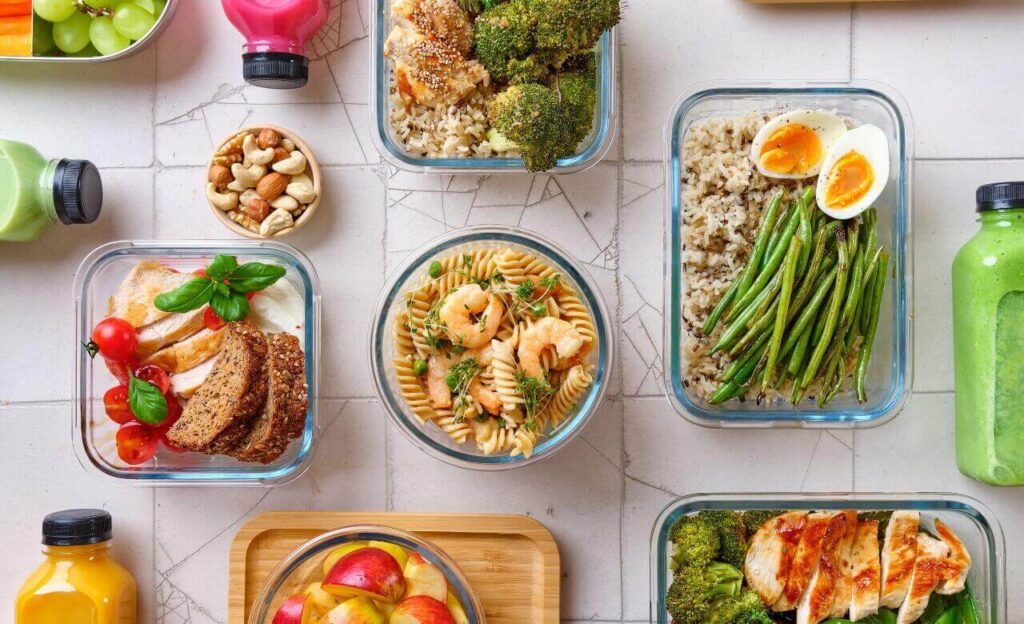
Knowing what a nourishing meal looks like is one thing. Actually getting it on the table on a week night is another. This is a question I hear often enough that I have written about it before in how to find the time to actually eat well, and over the years, both in my own life and in my practice, a few strategies have made the biggest difference.
- Build a freezer reserve: Anytime you cook, make one to three extra servings and freeze them. Making this change has had a noticeable impact on how I approach food from day to day. On the nights I come home tired with nothing planned, I simply pull something out of the freezer instead of resorting to takeout or snacking.
- Cook for the week in one sitting: Choose three or four recipes, shop specifically for them, and prepare them in one longer session. A few hours in the kitchen can set you up with days' worth of meals and cut down significantly on food waste.
- Keep a running recipe folder: Whenever you come across a recipe that looks appealing, save it in one place. When it is time to plan meals, you already have a list of options instead of starting from scratch.
- Use a slow cooker: Add your ingredients in the morning, walk away, and come home to a finished meal. It is one of the lowest-effort ways to get a nourishing dinner on the table.
- Use an Insta-Pot: Simple meals can be ready in as little as 20-40 minutes.
-
Trade meals with others: If you have neighbors or friends who eat similarly, consider taking turns cooking larger batches and swapping. In the time it takes to make one dish, you can end up with several.
You can put these strategies into practice without making major changes to your daily routine. Pick one or two that fit naturally into your week and build from there.
Listening to Your Body
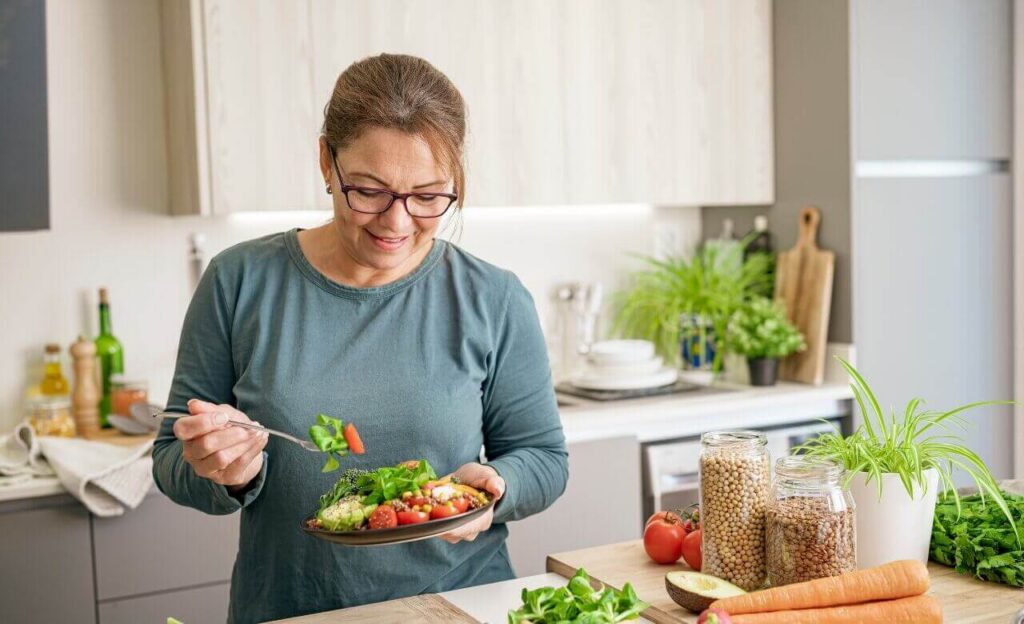
Alongside what you eat, how you eat matters. I encourage patients to slow down enough to actually notice their meals: how hungry they are beforehand, how satisfied they feel afterward, and how different foods make them feel an hour or two later. This kind of attention is often more useful than any rule about portion sizes, because it comes from your own body.
Eating well is not about achieving a perfect diet. It is about paying attention, making adjustments where they are needed, and trusting that your body is giving you useful feedback along the way.
Conclusion
A nourishing meal is not a single perfect recipe, it is a pattern you build one plate at a time. Some days, it’s a balanced home-cooked meal; other days, it’s something simple from the freezer, and that’s enough. Both are part of eating well.
Whether you are just starting to think more intentionally about your meals or looking to refine habits you have had for years, it is never too late to make small, sustainable changes. If you would like support building a way of eating that genuinely fits your life, connect with me for a consultation, and together we can build a way of eating that truly nourishes you. Your everyday meals are worth the conversation.